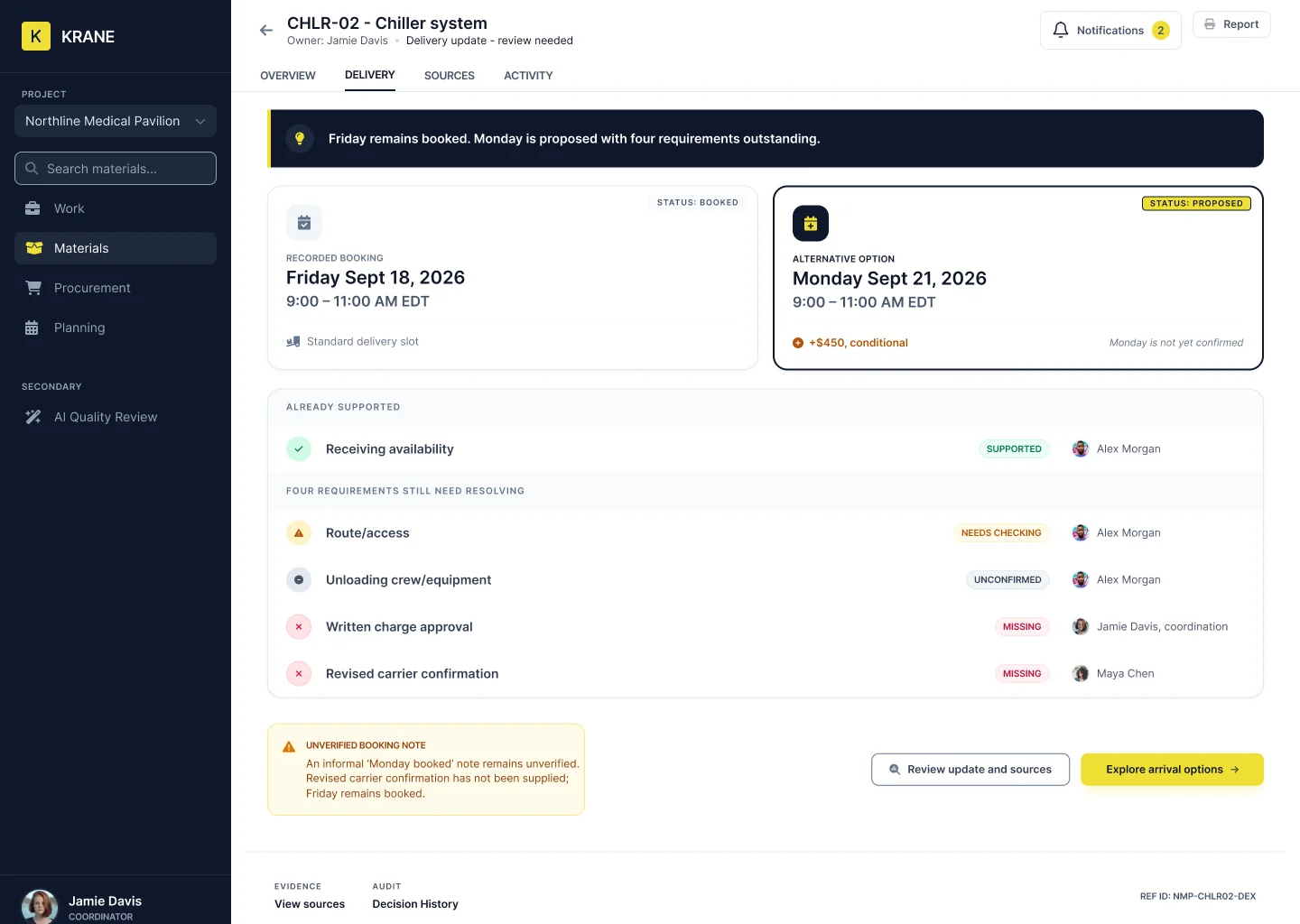
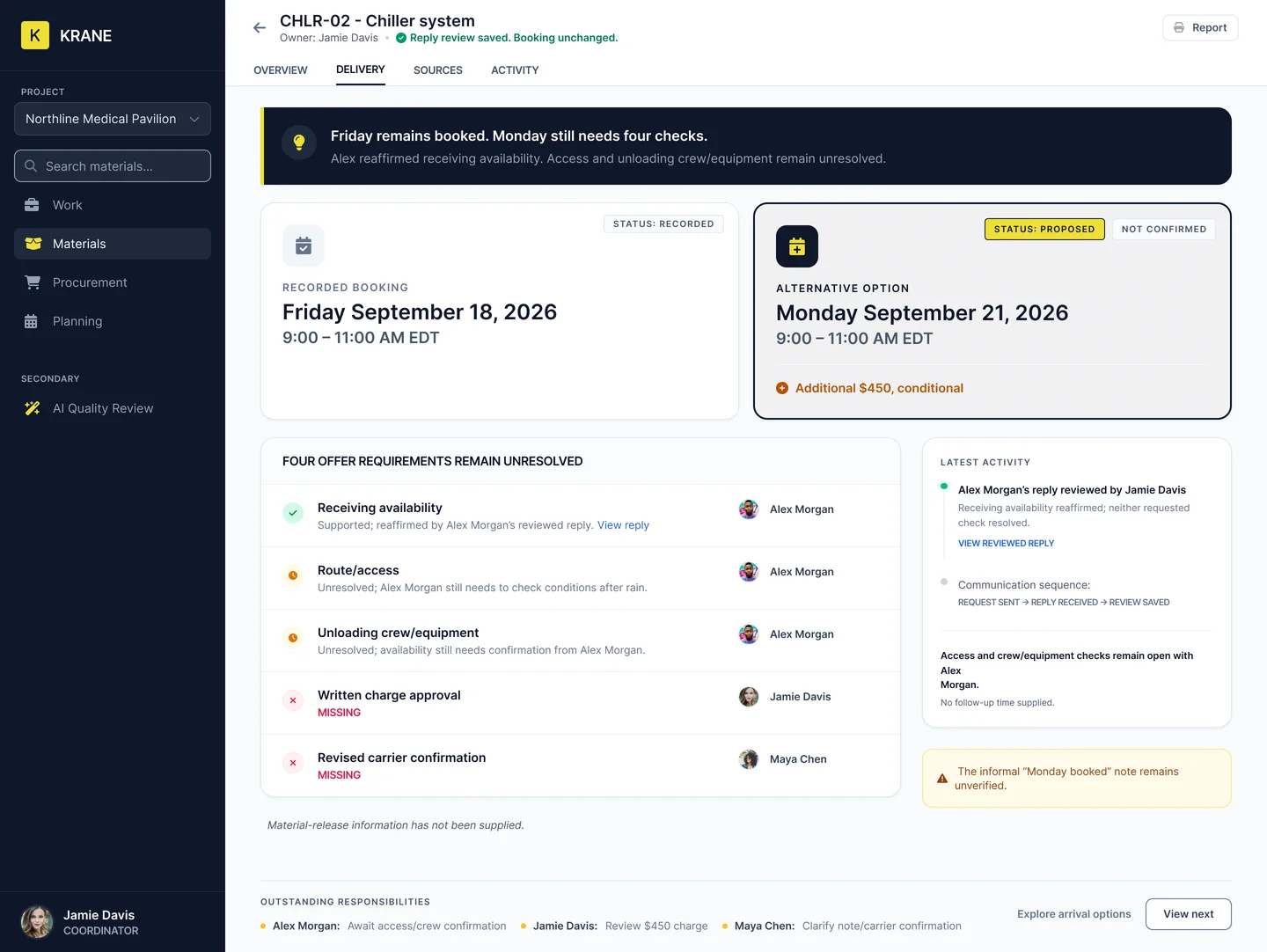
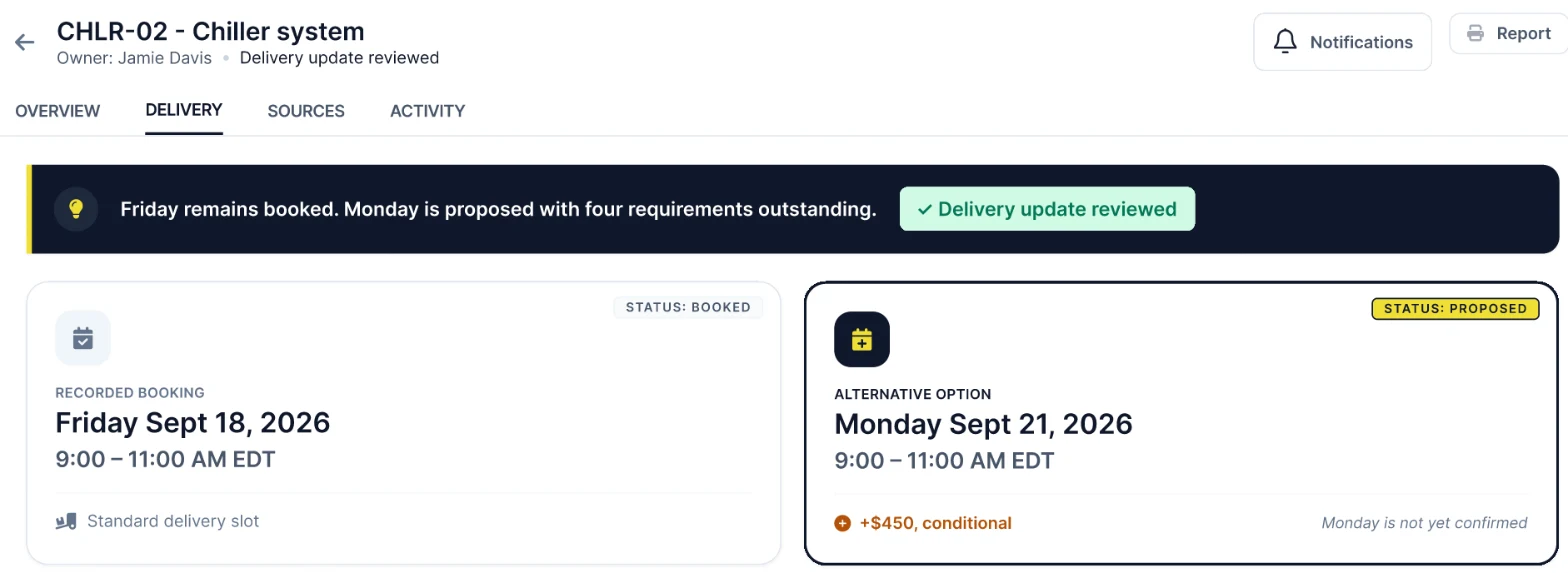
Friday is booked.
Monday is only proposed.
A design challenge for Krane. A working internal tool that turns supplier messages, site updates and approvals into one clear next decision.
- Role
- Solo designer and researcher. I wrote the code myself, using AI coding tools
- Timeline
- September 2026
- Context
- Design challenge for Krane
- Study
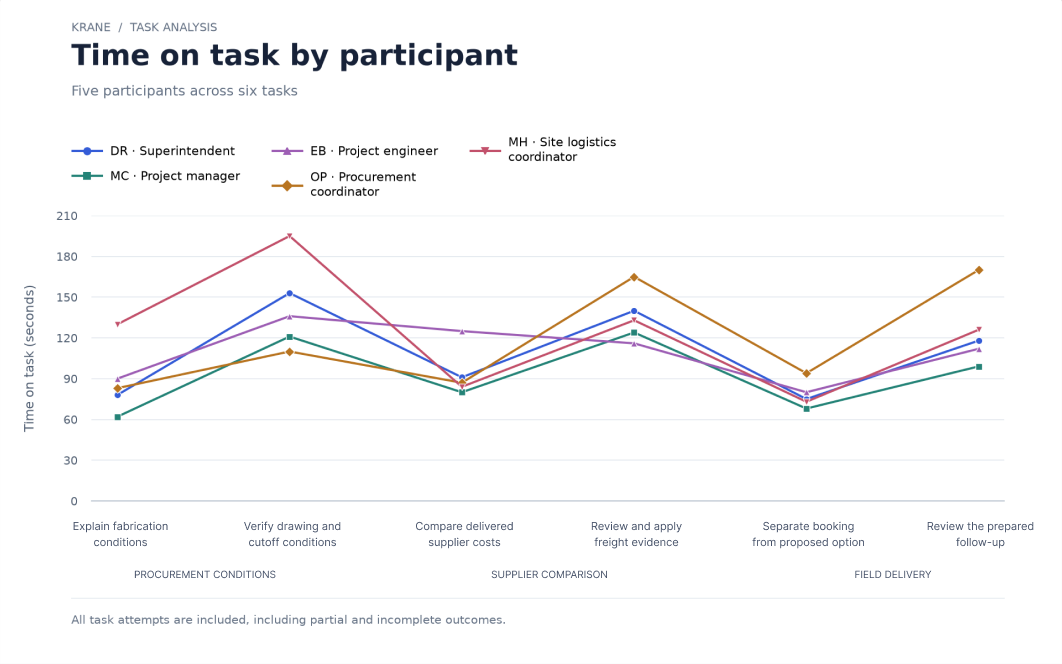
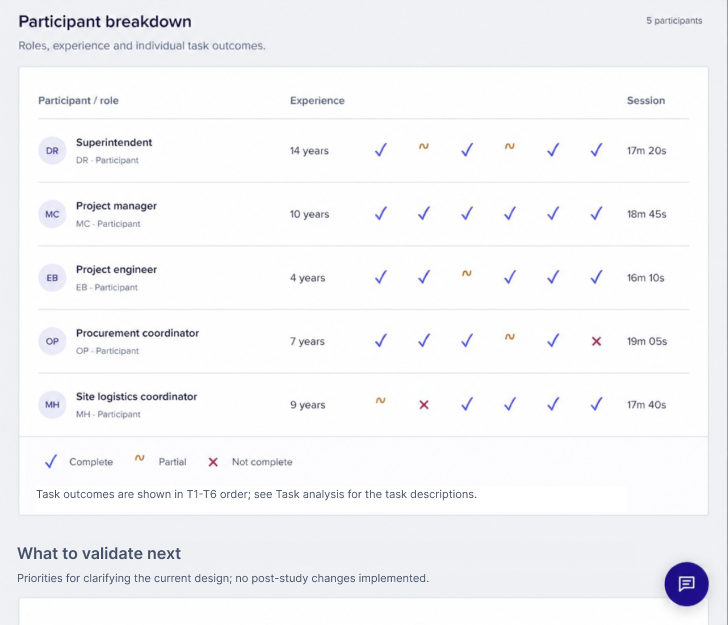
- Five construction professionals, six tasks each
How these were measured
One unmoderated round with five construction professionals, recruited through UX QuestionPro and paid $70 each. I read their submitted responses rather than watching sessions. No retest yet, so there’s no before and after.
From the team behind Krane.

“Nate did a design challenge for us at Krane, and he didn’t stop at Figma. He built a working app in React, and turned it around fast. Our whole product lives or dies on whether people trust what the AI tells them, and he nailed that right away. Would recommend him to anyone building AI products.”
Every message changes something, and it’s hard to tell what.
Krane asked me to use AI to make sense of construction information while keeping people in charge. A summary that sounds confident can hide the one condition that matters.
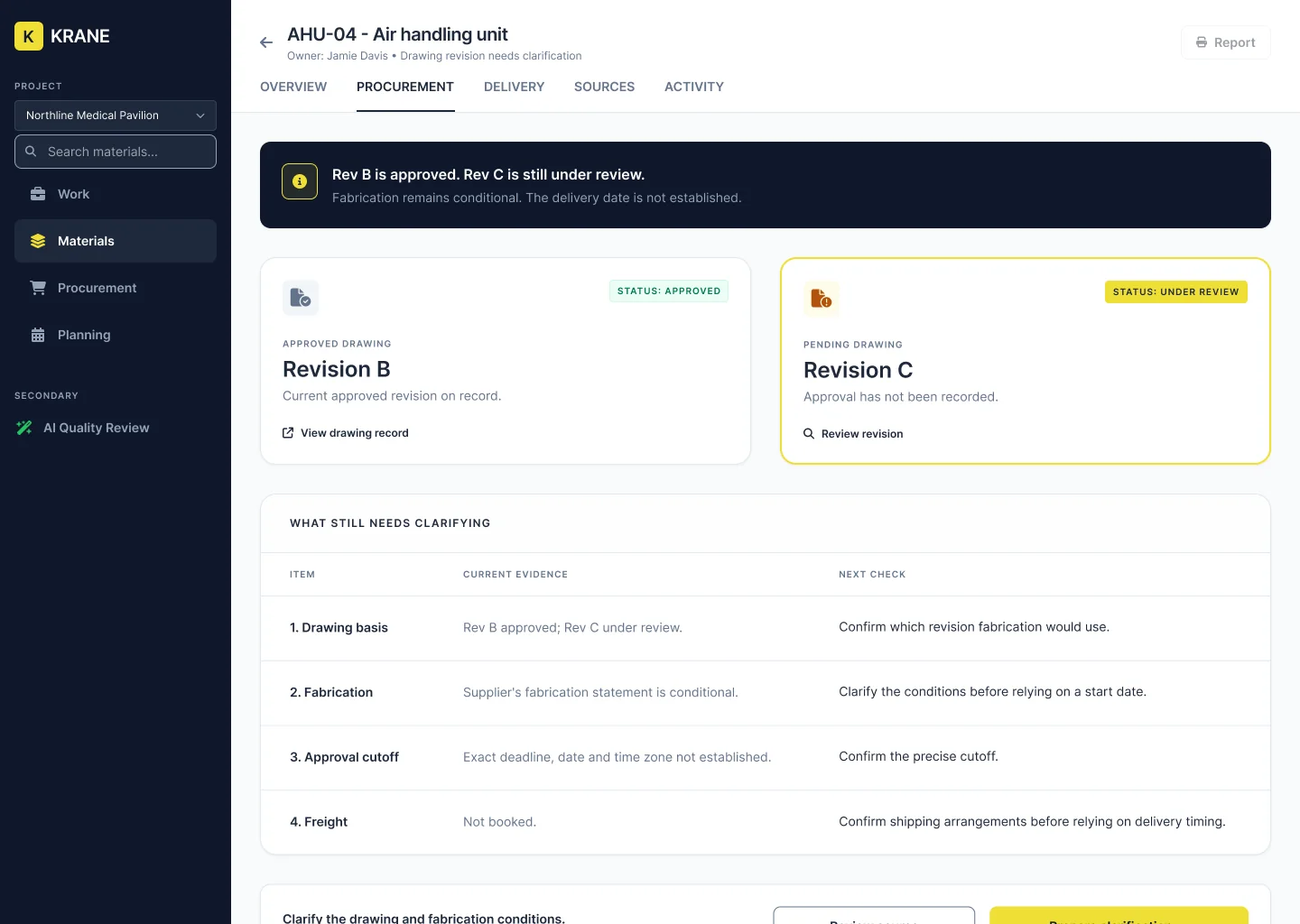
- A production date can be mistaken for an arrival date.
- A receiving window can be mistaken for a transport booking.
- A lower price can look better before freight is added.
Make checking easier, without hiding what’s still uncertain.
A review step only where a wrong reading could cost money, time or material. No checkboxes everywhere.
In testing, all five people could tell what was booked from what was only proposed.
Five construction professionals, six tasks each.
One queue for the people who run the job.
Coordinators track dozens of materials across email, a spreadsheet and phone notes. The tool is built around three jobs: find what changed, decide the next step, hand it to the right person.
Needs a decisionNorthline and Harbor · 4 items
Sorted by what blocks a date
| Material | What changed | Next action | Owner | Due | Status |
|---|---|---|---|---|---|
| AHU-04Air handling unit | Rev C still under review. Fabrication stays conditional. | Clarify drawing and fabrication conditions | Jamie Davis | Tue 12 PM | Blocks a date |
| CHLR-02Chiller | Carrier reply sounds positive. Four requirements still open. | Confirm access and unloading | Alex Morgan | Wed 3 PM | Needs checking |
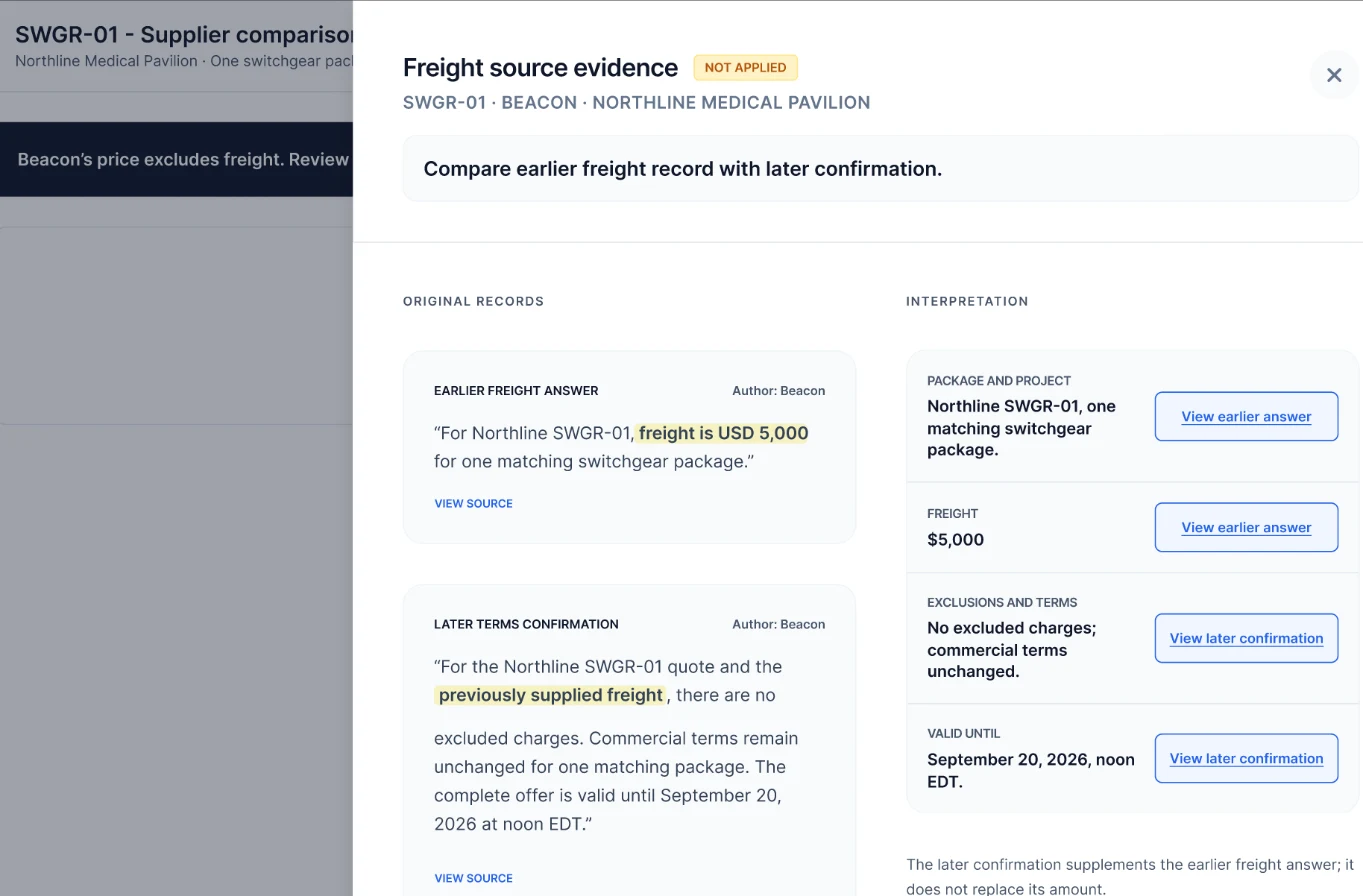
| SWGR-01Switchgear, Northline | Earlier $5,000 freight answer found. | Review and apply freight | Priya Shah | Thu 10 AM | Ready to review |
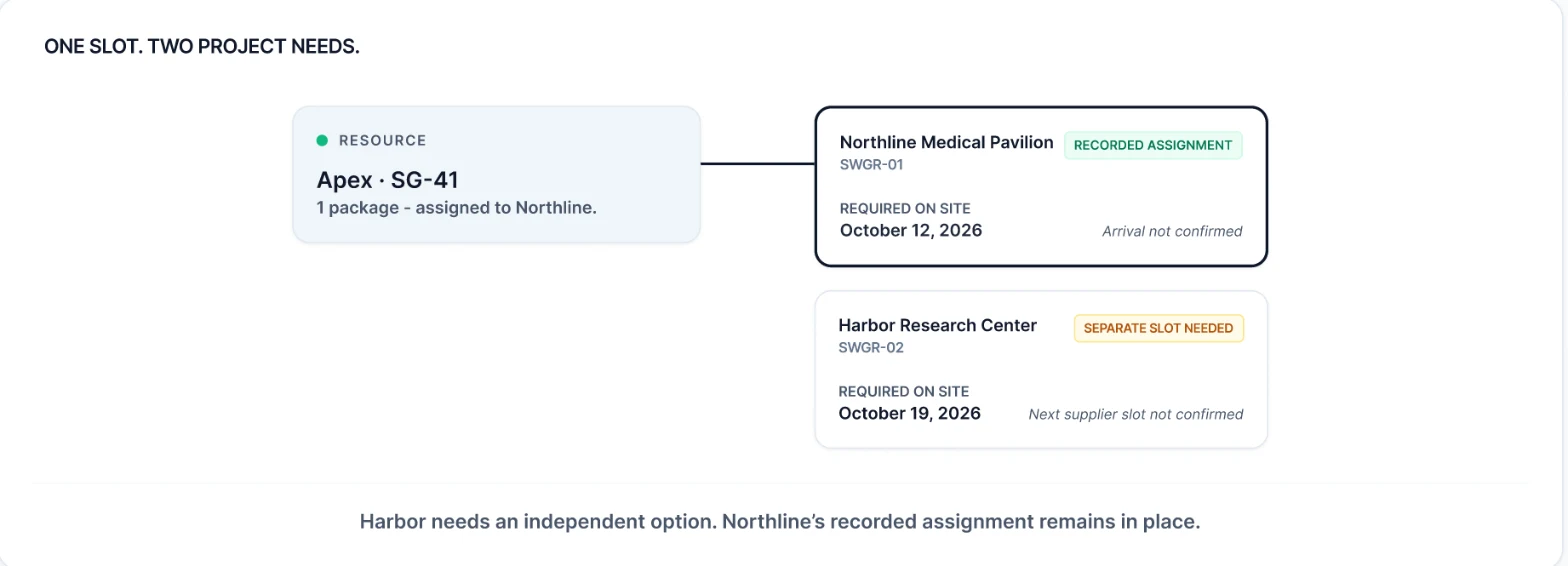
| SWGR-02Switchgear, Harbor | No production slot for October 19. | Ask Apex for separate availability | Priya Shah | Fri 5 PM | Unconfirmed |
A positive reply doesn’t mean it’s decided.
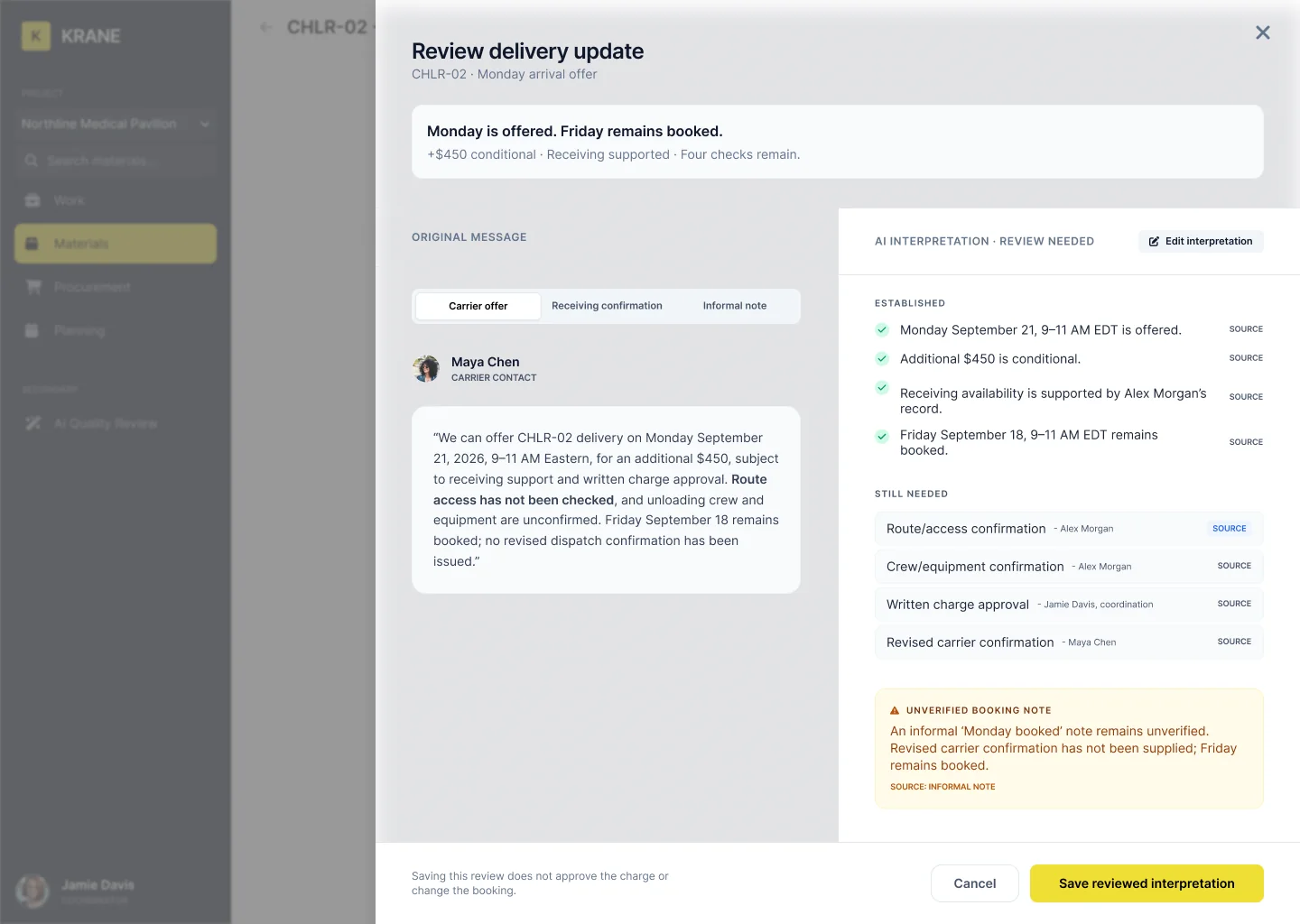
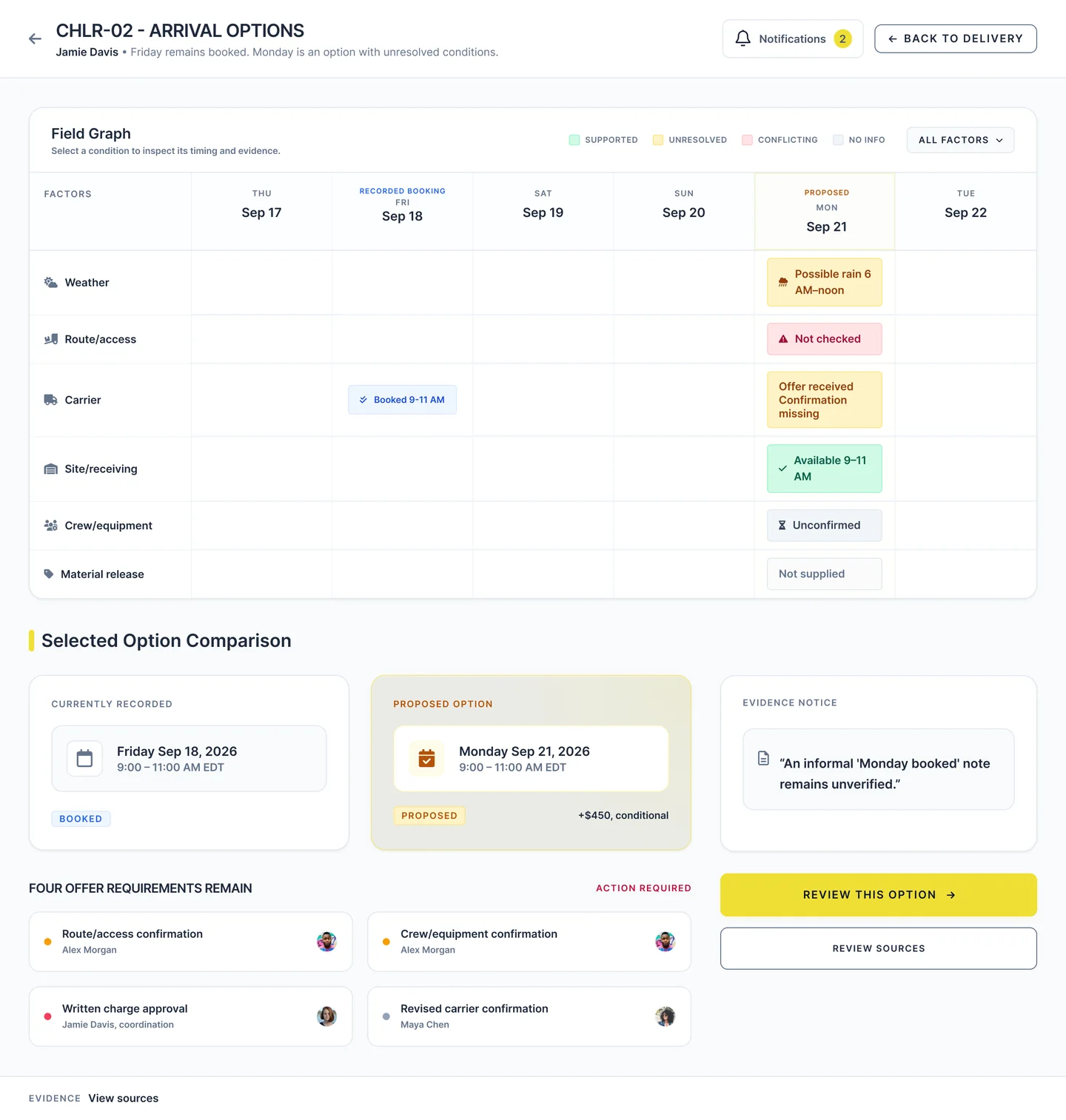
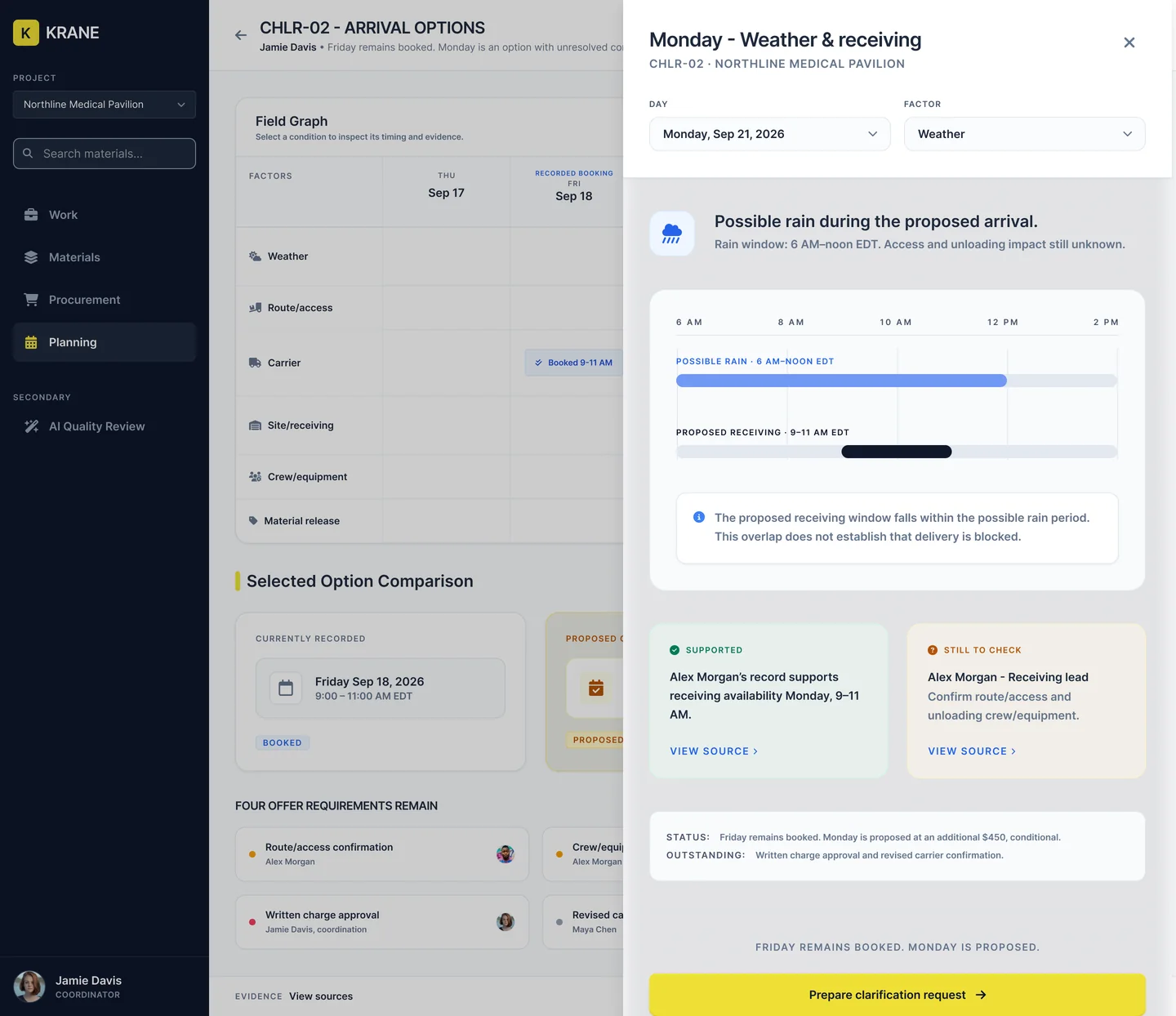
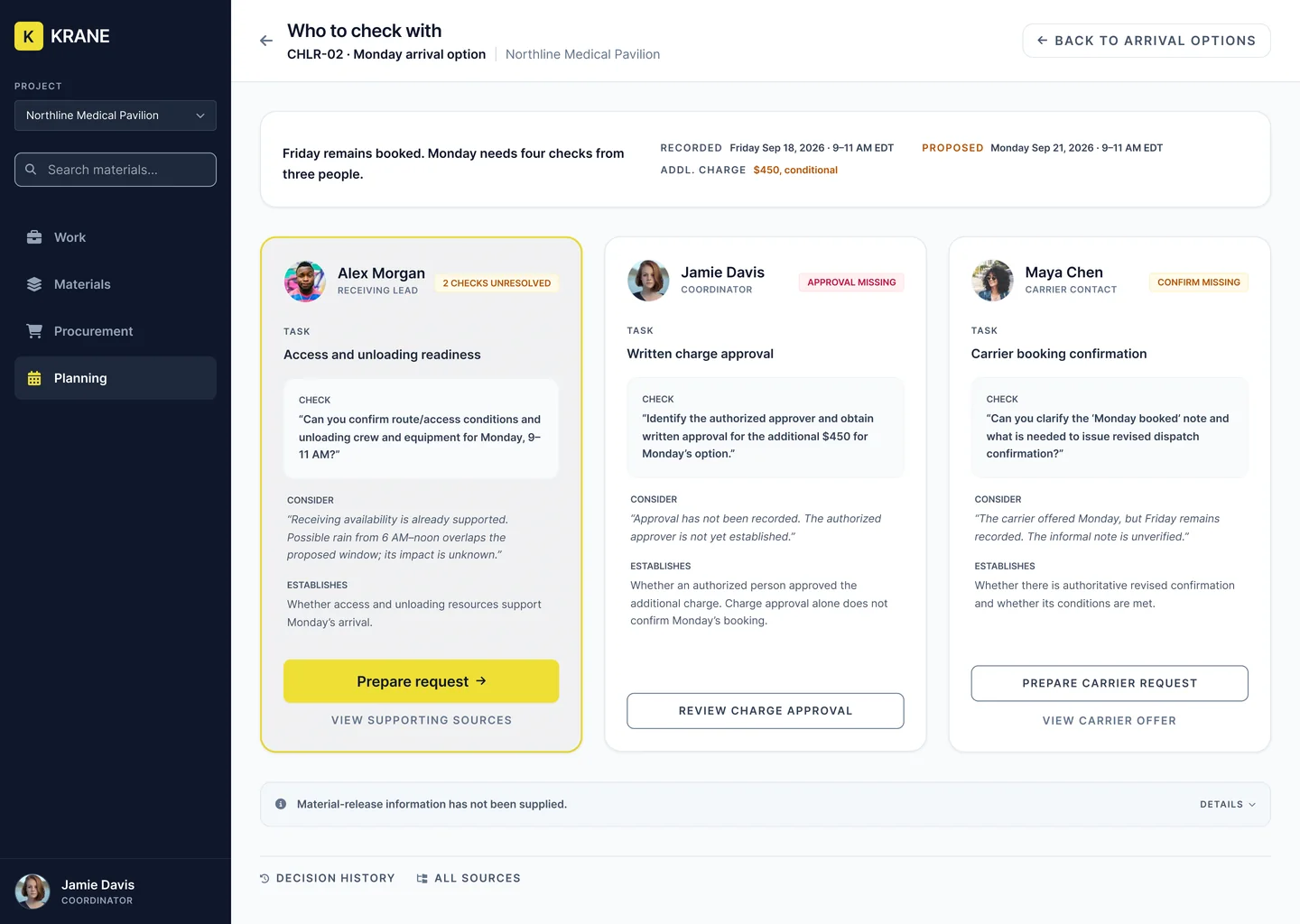
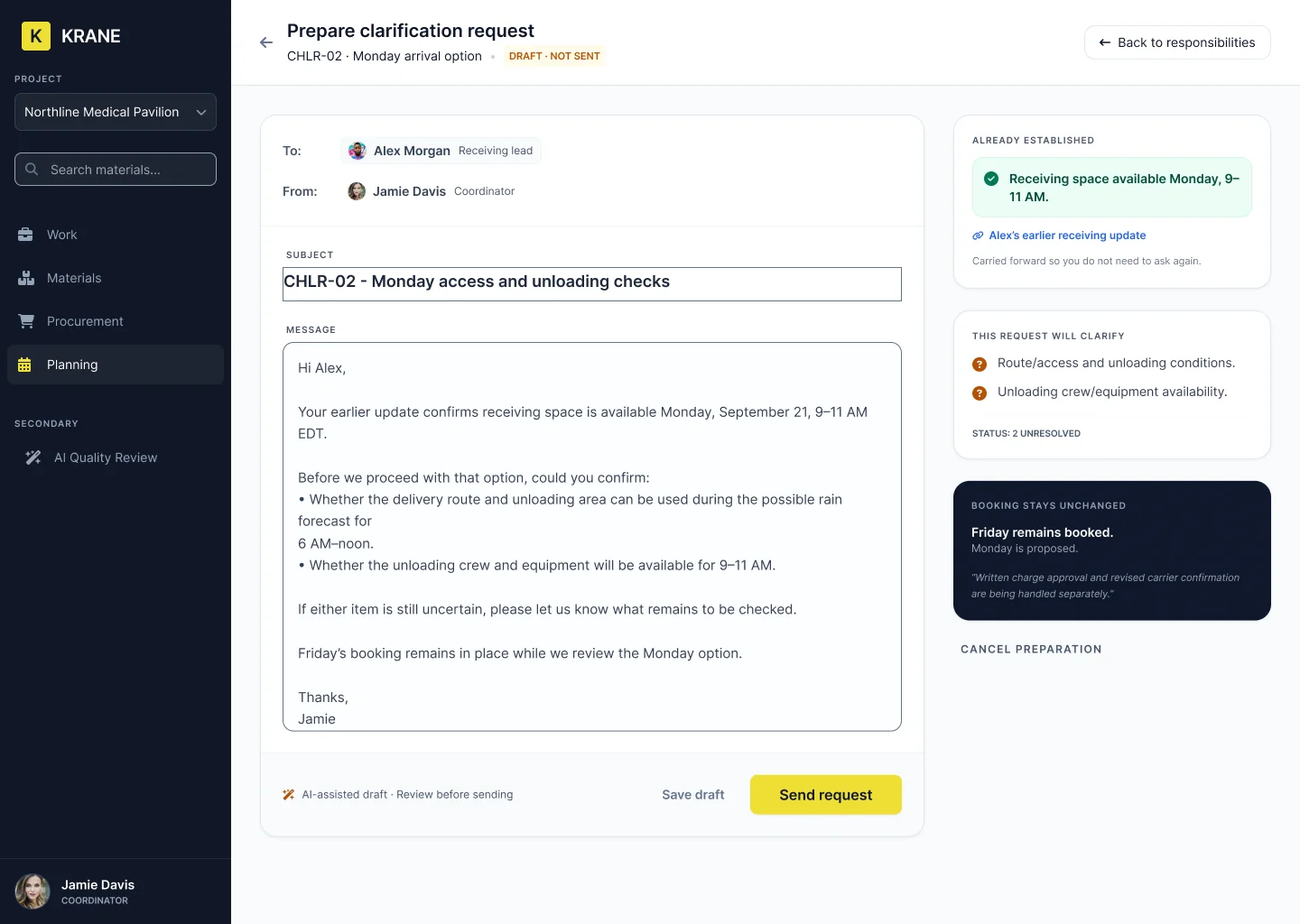
CHLR-02, a chiller for Northline Medical Pavilion. Friday 9 to 11 AM is booked. Monday is proposed at $450 more. Receiving space is supported, and four requirements are still open: route and access, unloading crew and equipment, written charge approval, and revised carrier confirmation.
Planning for when the AI can’t finish, or gets it wrong.
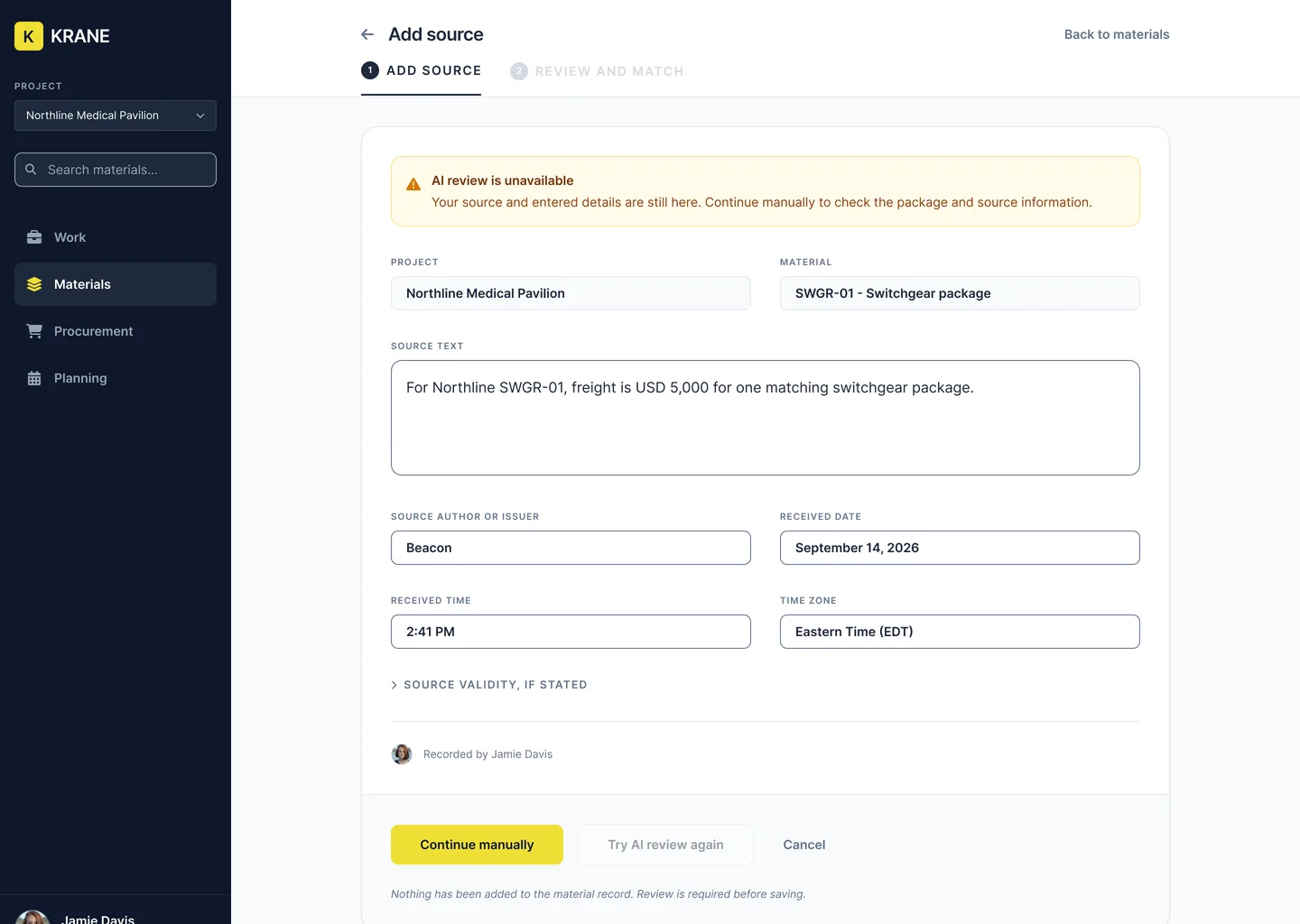
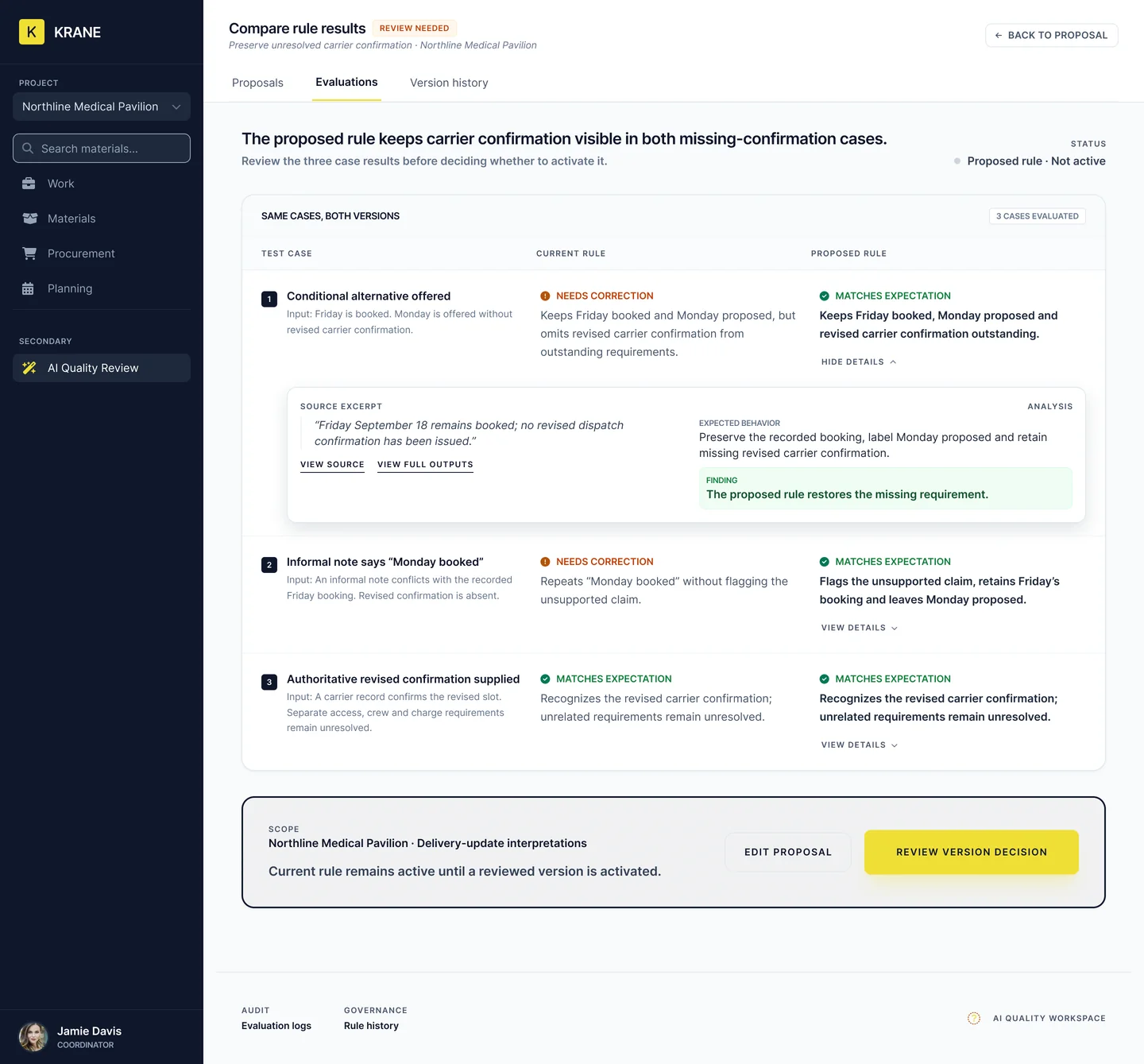
I ran a real test: 24 model calls scored by an AI judge against a saved rubric. Missed transport handoffs fell from 3 of 10 to none, and rubric failures from 8 of 60 to 4. Four citation errors remain.
Three things I left out, and why.
Checkboxes on every step
A review step sits only where acting on a wrong reading could cost money, time or material. Everywhere else there is no checkbox.
One-step review and apply
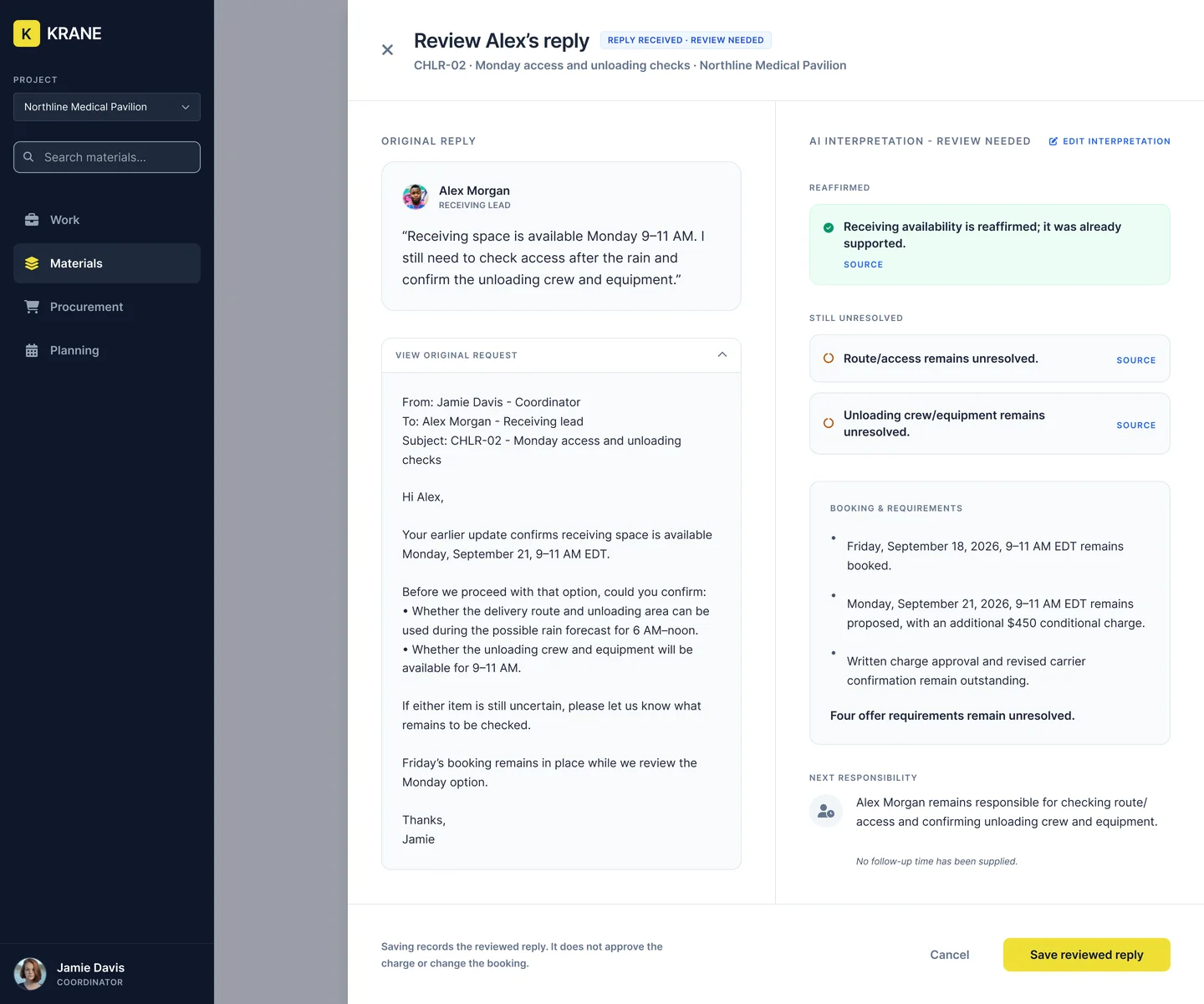
Reviewing never changes a booking or approves a charge. The cost: 3 of 5 finished this step in testing.
A time-saved claim
The study had no baseline, so I don’t claim any time saved. That waits for a pilot against how a customer works today.
Small fixes that changed what a screen meant.
The prototype, running in code.
I built Krane as a working app in React and TypeScript, with its own AI runtime and automated tests. Here it reviews a carrier email, keeps Friday as the booking and lists the four things still missing.
Where people still got stuck.
What I’d change
Watch sessions instead of only reading submitted answers. Unmoderated responses told me who got stuck, but not always why.
What I’d do next
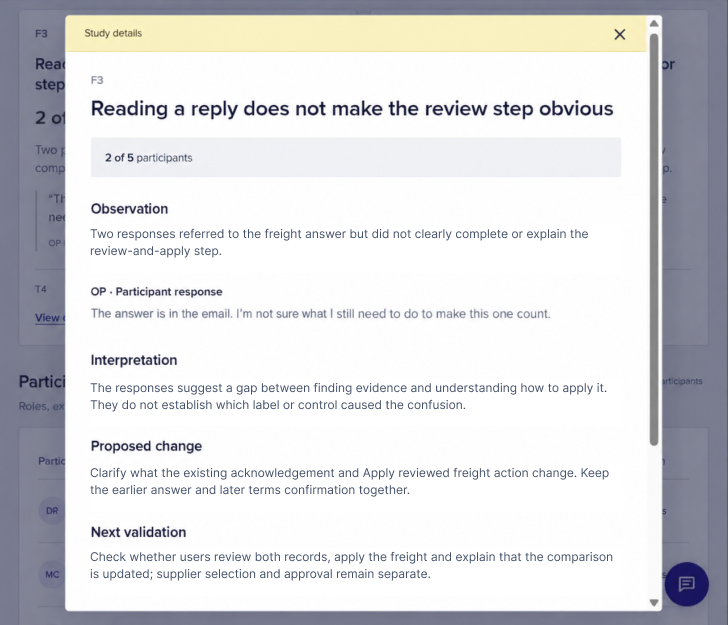
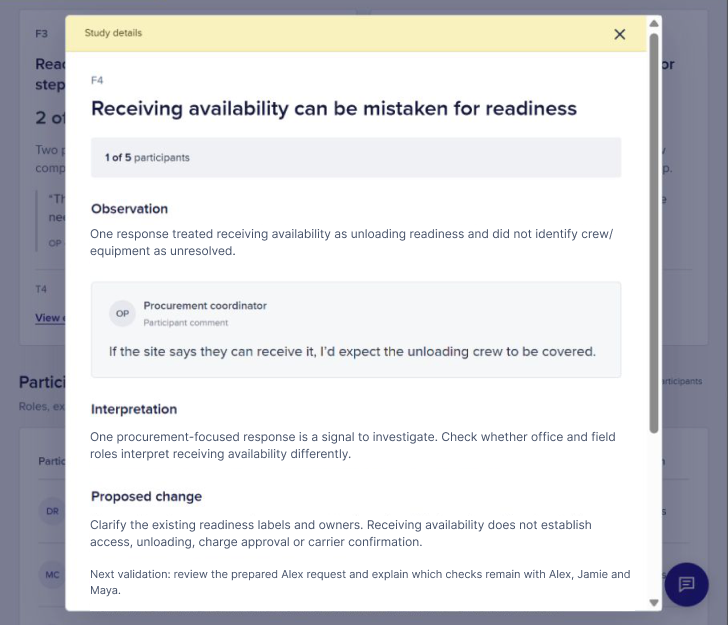
Fix the three places people stumbled: drawing requirements, the freight review-and-apply step, and the difference between receiving availability and unloading readiness. Then retest.
What I’d validate
Run a small shadow pilot next to how a customer’s team works today. Main measure: correct next actions. Guardrail: missed conditions. A 20% cut in whole-task time is a target to test, not a result.